Showing posts with label brunette. Show all posts

Friday, August 12, 2011

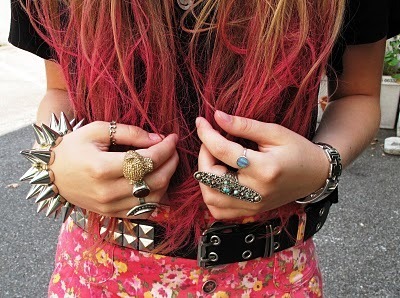
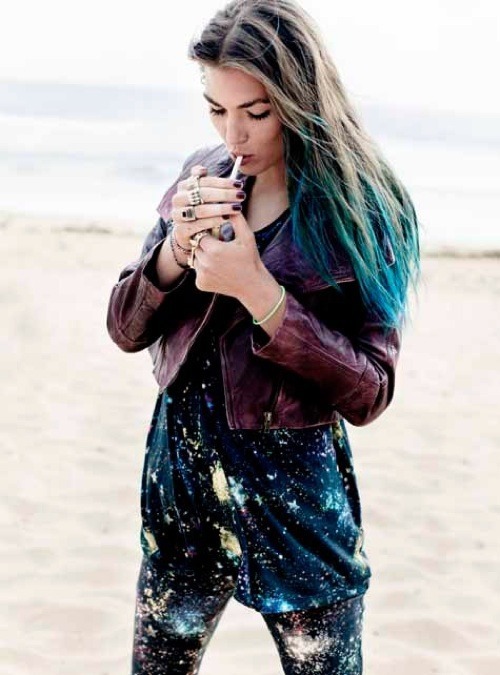
Tribute to Dip-dyed hair 2011

I really like this trend for dip-dyed hair. It seems that a lot more ladies are pulling it off well and it's leaking its way into local everyday South African styles too.

It works well for long hair, especially straight and slightly wavy hair types.

Check out these gorgeous examples of different colours and you might even be inspired to try it out :)

Pinks

http://forum.lookbook.nu/

http://forum.lookbook.nu/

Blue
http://forum.lookbook.nu/

Rainbow colours
Taryn Manning
www.hji.co.uk
Lauren Conrad
www.hji.co.uk

Red and Black!
http://charlotte-lucyy.deviantart.com/
..I think purple would look great too..

Or try a more natural-looking version, like Ashlee Simpson...
Ashlee Simpson
http://vintagelovecouture.buzznet.com/

What about fading?
With the latest technology ammonia-free hair colours and bleach, the integrity of the hair is respected and colour-treated hair is less likely to fade, provided that you treat your hair well otherwise. Also make sure that your ends are trimmed to prevent split ends and minimise natural dry ends due to having long hair.

Wednesday, April 13, 2011

Making Waves |

I was feeling like I've neglected my blog over the last month so started browsing through the pics I've collected on tumblr and was freshly inspired by the gorgeous 1950s-inspired waves.

A few weeks back I bought a large barrel curling tong (32mm) and I've been loving the styles one can create with it - transforming one's hair into classic sophistication and beauty :)

 Straight from my tumblr collection... here are some of the inspiring pics...

Charming, girly, princess-style, yet lady-like.
Exquisite, Right?
So glam :)
Some old school inspiration


Magical...
So Jessica Rabbit!

Tuesday, March 8, 2011

Jeannie D and Garnier

 SA Sweetheart Jeannie D, a perfect match with Garnier
Jeannie D, of the popular South African lifestyle show Top Billing, has been chosen to endorse Garnier Nutrisse for their upcoming Brown Animation winter range according to her Facebook page. The range consists of "three new copper shades with notes of deep mahogany and glimmering gold."

She is an undeniably a great match for this beauty campaign, with her charming nature, poise and lush, gorgeous deep brunette hair.

Jeannie's Style
Her current hairstyle is very romantic and feminine with long waves and soft, big curls - the kind of hair many woman dream of waking up with, though we know in reality it can take lots of work to look like that.

Top Billing

Jeannie's Colour
Her look has always been striking with deep brunette shades. Here her hair looks particularly rich and lush, enhanced by natural-looking highlights.

Top Billing

Hair Trends on Top Billing
On one of the shows last year, Jeannie had fun trying on hair fascinators, a large bow and other hair accessories to demonstrate Summer Hair Trends with the help of Reto of Reto Hair.
Jeannie and Reto
Top Billing

Jeannie modelling a dramatic hair piece
Top Billing


With a smile on her dial, Jeannie models the fun and trendy new hair accessories
Top Billing

Thursday, February 24, 2011

Organic Hair Colour - Does it Exist?

Many women are looking for an effective, safe, chemical-free or eco-friendly hair dye - whether for health and safety reasons, to avoid over-exposure to chemicals, to minimise allergies, to guard against potential cancer, to dye their hair whilst pregnant, or in the hopes of being more "green".

Unfortunately, there is currently no completely organic and permanent hair dye that is effective without a certain amount of chemicals. However there are some hair dyes which contain much less chemicals and these remaining chemicals also make up a lower portion of the hair dye mixture.

marieclaire

The main ingredient which makes the most difference when eliminated from hair dye is ammonia. Without ammonia, hair dye doesn't have the fumes associated with conventional hair dyes and is much less aggressive on the hair (and your health).

pantryspa
Without ammonia, hair dye is not as aggressively alkaline and the hair is therefore kept in a more natural state, giving a healthier, longer-lasting result to the colour, with natural shine.

Some other chemicals ingredients which can be reduced and even elimated in the hair colouring process include: formaldehyde, silicones, SLS (sodium laureth sulphate), thioglycolates, resorcinal, diaminobenzene, PPD and parabens.

For more information and understanding about the main ingredients, chemicals and allergic reactions associated with conventional hair dye see blog post: Permanent Hair Dye - Ingredients and Hair Dye Allergy, Henna & Pregnancy. These blog posts will also show how some ingredients are not as harmful as others.

Due to a personal allergy to ammonia fumes (my eyes have a immediate allergic reaction and require expensive eye drops) as well as seeing the harsh effects it had on my clients skin and hair texture, I went in search of more natural, healthier, safer options. I have found a number of options, which, true to form, leave the hair colour glossier and in better condition:

1) Henna, which comes as a natural, plant-based, earthy-smelling green powder provides vibrant orange/red tones to the hair. Unfortunately the henna which is used to dye hair almost always contains the chemical PPD to create a permanent hair colour so it is usually not chemical-free and most probably contains other chemicals too.

For this reason henna should not be used by pregnant woman and an allergy test is recommended before using it. Also keep the list of ingredients in case of emergency.
Henna powder
koilsbynature

Henna Leaves
herbalhaircolor
Mixed with water, henna is
applied as a paste to the hair
delhi4cats
Henna permanently coats the hair shaft which makes it difficult to ever change the hair tone, except to go darker. With the commonly used brown 'henna' colour, the repetitive application also tends to go darker and darker and often a lady will end up with her hair being much darker than she intended - even looking black!
In other words, the use of henna is a commitment and does not leave your options open for changing or adapting your hair colour.

2) Naturalmente is a professional hair colour range, imported from Italy by Gentle Approach. It provides an extensive set of creative tools for hairstylists to use, ranging from colour shampoos and conditioners (direct pigments) through to gentle professional semi-permanent and permanent tints. The grey coverage is good leaving the multiple tones of natural hair colour therefore, a believable 3-dimensional effect to suit your personal needs, with a lot less damage.
Naturalmente hair colour
Rose Flower Shampoo & Colour Shampoo (left)
can be used to prevent green hair caused by Chlorine;
Naturalmente hair colour (right)


Naturalmente provides gloss, shine and natural looking colour all the while respecting the natural structure and health of the hair. It is gentle on the hair and skin; moisturising and treating the hair with a high content of oils.

It contains no ammonia, SLS (sodium laureth sulphate), perfume, preservatives (parabens, formaldehyde) or silicones, but uses orange essence (for aroma), coconut derivatives, wheat, olive oil and top-quality purified pigments.

The Naturalmente range also includes the colour defence system (professional and home colour care system for colour-treated hair), hair care products and styling products.

mycleansingprogram

3) Nature's Colours (South Africa) also imports from Italy and comes in two permanent hair colour ranges. Herbatint is their retail/home colour and Color Herbe is their professional/salon colour.

It is also able to give natural-looking colour variation which blends/tones in with your natural colour tones and pigments present in the hair. It also contains no silicones or parabens.

Herbatint is against animal testing. It provides 100% coverage of grey hair and contains no ammonia, resorcinol or parabens. It provides better conditioning and longer-lasting colour than conventional hair dyes. Herbatint also contains the active vegetal ingredients of Aloe, Meadowfoam oil, Betula Alba leaf extract, Witch Hazel extract and Echinacea extract, and comes in a number of intense shining colours.
herbatintusa

Herbatint is sold in 28 countries worldwide
Related products/brands: Herbavita (New Zealand), Herbatint (UK), Herbatint (USA), Nutraways (Canada), Nature's Nutrition (Canada)

Color Herbe is the professional ammonia-free permanent hair colour with 100% coverage of grey hair. It does however still contain diaminobenzene, PPD and resorcinol which are used for the effectiveness of the product and this may cause an allergic reaction. Being ammonia-free, it does not damage the hair structure, and it also contains Aloe Vera for soothing and conditioning benefits.

Color Herbe
expatliving

Vegetal Color
naturescolours
Vegetal Color, also from Nature's Colours, is a semi-permanent colorant specially formulated to add variety to the tones in your hair and allows you to refresh colour tones between salon visits (Over time the colour will wash out gradually).

It may camouflage grey but is not suitable for completely covering grey hair. Neither will it lighten your hair.

It contains no ammonia, peroxide, PPD, diaminobenzene, parabens or silicones and appears to be one of the safest options for hair colour during pregnancy (It does however contain resorcinal so it is advisable to consult a doctor before using it or any hair colour when pregnant).


Vegetal Color is very easy to use since no mixing is required. It has also not been tested on animals.

Vegetal Color Colour Chart

I have used all these products and would be happy to discuss with anyone about these hair colouring options, and any others you may be familiar with. If you have any concerns or questions, fire away :)

You may also be interested in: Treat Your Tresses
Healthy Hair From The Inside Out
Hair Loss And Thinning

Wednesday, January 5, 2011

Hair Dye Allergy, Henna & Pregnancy

Itchiness & Allergies
Many people experience itchiness from hair dye. Redness and sensitivity can develop immediately, or over time, and it is quite common. Considering the level of ammonia (extremely alkaline at a ph of 12.5, whereas skin is 5.5) and other irritating and toxic chemicals (such as PPD and Resorcinal), this is hardly surprising.

A more severe and less common reaction to hair dye is an all-out allergic reaction with inflammation and swelling. In this case special care (even hospitalization) is required. Care should be taken as soon as possible since inflamed hair follicles can result in permanent hair loss and baldness if left untreated for too long. I would recommend seeing a doctor within 24 to 48 hours if any inflammation occurs at all.

Henna tattoos
Also consider the correlation between tattoos and allergic reaction. Permanent tattoos do not contain the chemical PPD but black henna does (see PPD Info) and can make a person more sensitive to hair dye. Think of it in terms of exposure to the chemicals; the more often you are exposed to the chemicals the more likely you are to develop a sensitivity or an allergic reaction.

Unfortunately once you have an allergic reaction, you are highly unlikely to be able to tolerate hair colouring products again so it is something to consider and be aware of if you are already sensitive.

Compromised Health
With regards to people with lupus or cancer I would recommend not dying your hair as a matter of limiting all unnecessary contact with chemicals unless you are able to find an incredibly mild, non-toxic hair dye. Nowadays there are a lot more options on the market, but you would have to do your homework on them and make sure your doctor is okay with it.

Pregnancy
Pregnancy is also a time to consider your health and safety for your baby's sake. Another option for hair colour during pregnancy is to do colour in foils rather than a full head application. This way the colour does not touch your skin while it is processing (oxidising).

For more information about the specific chemicals that are reason for concern, see blog post Permanent Hair Dye - Ingredients

Permanent Hair Dye - Ingredients

Synthetic hair colour contains various amounts of chemicals to achieve the desired lift, intensity, cover and hold for permanent hair colouring. The amounts can vary with different brands and therefore results vary as well as the impact that it has on your health and the environment.

The following discussion of chemicals looks at the ingredients that are most dominant, most common, or most toxic, or simply raise concerns with consumers. I hope it will help you to understand what really is a problem and what isn't. However, there are gray areas, which is why these products are still on the market, and it is up to you to make an informed choice.

1) Ammonia
Ammonia is considered to be an occupational hazard and also hazardous in the household environment as it is used in cleaning products. It is the most common and most offensive ingredient in permanent hair colour as it gives off strong fumes that are irritating to the eyes, lungs, and to a lesser extent, the skin.

In industrial uses, the ammonia vapour from concentrated ammonia solutions is severely irritating to the eyes and the respiratory tract, and protective measures are required for safety.

Source: healthandbeautyace.com
In hair dye, ammonia is used to open the cuticles (outer layer) of the hair in order to deposit the artificial colour pigments within the hair structure. It is extremely alkaline (ph 9 - ph 12.5) and is particularly damaging to the hair's natural protein structure. Ammonia-treated hair becomes very dry and coarse which is usually masked by the addition of silicones (synthetic softeners) to the hair dye. Over time the silicones wash out, the colour fades and the true condition of the hair becomes apparent.

2) PPD
p-Phenylenediamine (PPD) is an ingredient in hair dyes, most dominantly used in darker colours and is known to cause allergic reactions; it was even voted Allergen of the Year in 2006. It often causes redness on sensitive skin and can also be found in "black" or dark henna mixes (Natural henna only produces a reddish colour).

All permanent hair colour products require PPDs to alter your natural hair colour. Though the research is inconclusive it has been suggested that PPDs are potentially harmful. The current European legislation allows for PPD's to compromise up to 6% of a hair dye product whereas most brands contain a maximum of 2.1%. The safest products would be those with less than 1% PPD. However, it is recommended that pregnant ladies and people undergoing chemotherapy do not use any permanent dye that will be in contact with the skin whilst it is processing.

I also want to reinforce that the darker the hair colour the more PPD is in it so ladies who frequently dye their hair dark brown or black are more exposed to it than others.

For more information on PPD allergy see: http://dermnetnz.org/dermatitis/paraphenylenediamine-allergy.html
With regards to the safety of the chemical see: http://en.wikipedia.org/wiki/P-Phenylenediamine#Safety
Another good article, indicating the use of PPD in dark henna mixes: http://www.wisegeek.com/what-is-para-phenylenediamine-ppd.htm

3) Resorcinol
A common ingredient in hair colours and bleach, resorcinol is a skin irritant that is toxic to the immune system and a frequent cause of hair dye allergy, however  there are no regulations limiting the amounts of resorcinol in personal care products and it is even used for medical purposes including the treatment of acne, psoriasis and eczema. See Wise Geek for more information.

4) Hydrogen Peroxide
Hydrogen Peroxide (H202) is not a serious hazard. It is simply oxidised water that breaks down to oxygen and water during the colouring process. At low volumes it is not harmful or volatile (up to 12% is used in hairdressing) and is environmentally-friendly as it occurs naturally. It does however dry the skin out and will whiten the skin temporarily, so gloves should be worn when handling H2O2.

Very low levels (3-6%) are needed for the deposit of hair colour on the same or darker level as one's natural hair colour. And higher levels are used for lift (lightening) and speeding up the colouring process.

Tips
Essentially, PPD and Ammonia shouldn't have contact with the skin, but with the process of colouring the roots of the hair, especially to cover gray, it is impossible to avoid this. When other options for hair colour are not available here are some tips for safer colouring:
  1. Always use protective gloves when applying.
  2. Apply vasoline around the hairline to prevent the colour from getting on the skin next to your hairline.
  3. Do not inhale the hair dye directly and ensure that there is good ventilation once the colour is mixed.
  4. Do not exceed the manufacturer's maximum processing time. Be careful to time it and keep to those limits.
  5. Ensure that the hair dye cream/paste is removed 100% from the hair and scalp after processing.
  6. It would be recommended to use a shampoo with the following characteristics: clarifying, ph balanced (the hair/scalp is 4.5 - 5.5) or slightly more acidic (3).
For more information see the blog post Hair Dye Allergy, Henna & Pregnancy.