Friday, September 30, 2011

How to find a good shampoo

Have you ever wondered if you could find a better shampoo?
One that works better? 
Often shampoo is found to become less effective over time (or possibly it wasn't effective in the first place). Do you think it's possible that a shampoo can be suited to addressing the needs of both your hair and your scalp? It would be great if we could find a shampoo which actually becomes more effective and provides greater benefits with continuous use.
STUFF that harms
The main ingredients in most shampoos (next to Water/Aqua) are Sodium Lauryl Sulphate (SLS) and/or Sodium Laureth Sulphate (SLES). They are actually known to be skin irritants:
Sodium Lauryl Sulfate - Sensitivity
Sodium Laureth Sulfate - Irritation

This would be particularly interesting to anyone with sensitive skin, prone to eczema, dermatitis or psoriasis. Some mothers are also aware that their children have more sensitive skin and can develop allergies and reactions to products with a high concentration of SLS and SLES.

Beauty traitor in your home
To start with, SLS becomes extremely alkaline (high pH) in the presence of water, and therefore highly aggressive on the hair and scalp (which favours a slightly acidic environment). On top of that, it also disrupts the natural oil balance (nature's moisturiser and skin protector) and can cause allergies, aging/dehydration, and the above-mentioned conditions especially to people exposed to regular use.

By stripping the skin of moisture,
SLS exacerbates over-active or under-active sebaceous glands
and so worsens the problems of oily or dry skin.

Though SLS is generally tolerated in accepted concentrations found in cosmetic products, it is, however, used frequently used in household products so it should not come as a surprise that one is exposed to it regularly, throughout each day, in liquid hand soap, shampoo, body wash, bubble bath, dish-washing liquid and household detergents. It is also used in beauty products and hair colouring products.

STUFF to avoid at all costs
  • Formaldehyde is toxic, allergenic and carcinogenic. Why they add it to shampoo and other cosmetic products is beyond me.

STUFF that's ok..
And
STUFF that helps
Apart from SLS as the predominant cleanser and foaming agent, the other ingredients in shampoo are mostly there for cosmetic purposes; to improve the texture, softness, cleansing ability and fragrance, as well as having preservative properties.

Generally, there are few ingredients which provide considerate benefit to one's body, and those ingredients are often not in a sufficient concentration to make a significant difference (If they were, shampoo would be a lot more expensive).

If you need to look for an alternative to SLS, or look for a product which uses lower proportions of SLS, look for Cocamidopropyl betaine listed before SLS, or in place of SLS in the ingredients list. It provides a similar cleansing effect but it less harsh and allergic reactions are uncommon in comparison to SLS.

A completely new and uncommon ingredient for cleansing is Zinc coceth sulphate. This can also be used in place SLS or Cocamidopropyl betaine. It is derived from Coconut and Zinc, with an acidic pH of 4.5 (similar to healthy skin and hair), it is very mild and gentle on the skin, and due to its ability to deposit zinc basic salts onto the skin, it works against dandruff. It is an excellent ingredient which effectively addresses hair cleansing and scalp care needs, simultaneously.

Now can you see how it is possible to assess a shampoo quickly and determine which is more likely to be effective and provide greater benefits with continuous use?

PH Level
Another thing to look at is pH level. Most shampoos should be somewhat acidic, ranging between 4 and 6 (or a bit lower). Unfortunately most shampoos do not actually display the pH level on the label so it's hard to distinguish them, but it is preferable to use on which is similar to the pH of healthy skin.

An acidic pH is also preferable to counteract the effect that hard water has on our hair and scalp. Hard water is quite common around the world. It contains dissolved minerals and is likely to be neutral to slightly alkali. In an alkaline environment the cuticles (outer layer) of the hair open up and expose the hair to weakening and damage. An acid shampoo can help prevent this and thus protects and maintains the hair structure


Recommendations
I use two brands of shampoo in my salon. Both are free of SLS, provide excellent results and are very popular with my clients:

  • Naturalmente - It is a professional product made in Italy. It is dermatologically tested and is not tested on animals.
  • African Organics - It is made from African ingredients and is also not tested on animals.
For a specific recommendation for your particular hair care and scalp needs you will need a consultation with a hair care professional. The essential oils used in these two brands (especially Naturalmente) aim to help support scalp care and hair care needs, which is why I have found them to be particularly effective and well-suited for common needs such as dry scalp, curly/dry/damaged hair, oily scalp, stimulating hair growth and preventing unnecessary hair loss.
_______________________
    And my last tip for finding a good shampoo.. Remember, if it's not good for your face you shouldn't be putting it on your scalp and hair! 
    I trust the products that I use to wash my hair to such a degree that I am comfortable washing my face with them! How many hair professionals can say that about the products they recommend? :)

    Wednesday, September 21, 2011

    BBC News Update - Baldness


    Fatty skin cell clue to baldness

    Fat cells in the skin have been identified as the source of chemicals needed to make hair grow, according to researchers in the US.

    Experiments on mice, reported in the journal Cell, suggested hair stem cells were controlled by fat.

    Injecting a type of fat cell stimulated hair growth in mice which otherwise struggled to grow hair.

    The Yale University team says it may be possible to use the findings to one day restart hair growth to reverse balding.

    Follicles

    They said there was a four-fold increase in the number of "precursor" fat cells in the skin around a hair follicle when it started to grow.

    They looked at defective mice which could not produce these fat cells. Hair normally grows in cycles, but in the defective mice - the follicles had become trapped in the dormant phase of the cycle.

    Scientists injected fat cells from healthy mice into the defective mice. Two weeks later, hair follicles had started to grow.


    “We might be able to get hair to grow again”
    Prof Valerie Horsley
    Yale University


    They showed that precursor fat cells were producing a chemical - a platelet-derived growth factor - at 100 times the level of surrounding cells.
    Injecting the growth factor into the skin of defective mice could kick-start growth in 86% of follicles.

    The study proposed: "That [fat] precursor cells secrete platelet-derived growth factor to promote hair growth."

    The US team is continuing to look for other chemicals which may be involved.
    However, it is not known if the same chemical processes take place in humans.
    Previous studies in men have shown that bald parts of the scalp had the same number of hair stem cells as hairy areas.

    Prof Valerie Horsley, from Yale University, said: "If we can get these fat cells in the skin to talk to the dormant stem cells at the base of hair follicles, we might be able to get hair to grow again."

    The study suggested the fat cells could have other functions involving stem cells such as tumour formation or healing wounds.

    Tuesday, August 16, 2011

    Hair Loss and Thinning

    Is it normal?
    Though hair loss isn't generally considered a health threat, it does affect the way we feel about ourselves. The scope of a hair loss problem is therefore not determined by counting the number of hairs you are losing per day but by the way it makes you feel. 

    I believe you are the most qualified person to judge whether you have a problem with it or not. If it seems different, it probably is, and this is not a case in which you have to accept it just because it is a common problem and isn't life-threatening. Hair loss may just be a clue to a lack of well-being or a more serious condition, and by treating the it holistically you may experience improved vitality in other ways too.

    Now all we need to do is figure out what's causing it...
    The only real medical concern may be sudden and patchy hair loss occurring all over the head and is best seen by a dermatologist or trichologist, as this may indicate a disease of the hair follicles called alopecia areata.

    Apart from that you may be experiencing temporary hair loss due to fluctuating hormonal levels. These can be experienced at times like puberty, going off the contraceptive pill, childbirth and menopause. If the hair does not grow back normally afterwards, your hormonal system may have gone out of balance and need to be attended to.

    Another cause may be prolonged stress on the body's organs and systems which can lead to illness and a lacklustre appearance. Stress will most likely manifest in a number of other symptoms which can include fatigue, bad skin, poor weight management, migraines and insomnia. When we are free of a chronic stress situation we may not necessarily be free of these symptoms and we need to rest our body as well as feed the body with the correct nutrition it needs to repair and sustain itself.

    However if you are experiencing progressive hair thinning and loss, the answer most probably lies in genetics. Let's have a look at what Dr. Michael Mol has to say about it:

    7 out of 10 men will suffer from Androgenetic Alopecia, which is the scientific name for the genetic predisposition in men for pattern hair loss - and is the cause of over 95% of all balding.

    That doesn’t leave much room for all the Old wives tales about balding – and rightly so, because most of them are downright wrong; Standing on your head or massaging your scalp is an act of futility, there is simply not enough evidence to label bad circulation as a cause. Wearing a hat, long hair or a ponytail has no detrimental impact on your follicles. Stress plays a possible role, but for significant hair fallout you’d have to live through several months of extreme emotional turmoil. Sweating is a possible contributing factor, through clogging and killing follicles – but most shampoos will combat that consequence. A good rule of thumb is - if it didn't make you bald when you were 15, it's probably not making you bald now.

    Science has yet to prove what is truly responsible, but this they do know: DHT (Dihydrotestosterone) is a naturally occurring hormone (that assists with sexual development during puberty), which triggers an autoimmune response, initiating an attack on the hair follicle. With each progressive growth cycle (as we get older!) the hair gets shorter and thinner, withering until it finally turns into unpigmented vellus hair – or peach fuzz!

    Our individual susceptibility to that hormone differs – and that’s where genetics come into play. The tendency to lose hair is inherited from either parent (it’s a myth that the mothers’ side is more crucial!), and stretches as far back as 6 generations.

    So, beside a proper haircut, that can make a vast difference in diffusing hair loss, is there any real hope for the “bald & beautiful?” Absolutely! For the first time in history, medical science has shown that hair loss can be treated, and even reversed. You’re no longer obliged to glibly accept your fuzzy fate, but rather speak to a qualified dermatologist who’ll introduce you to a new world of “hair-raising" technology.


    But before you blame genetics, remember that hair loss is not considered a medical health threat so we can also consider that there are pharmaceutical drugs which actually have the unpleasant (but not medically-concerning) side-effect of hair loss!

    We already know chemotherapy causes hair loss and now you are aware that the contraceptive pill can too. It may be the simplest way to find a clue for hair loss (or any other abnormal symptom you may be experiencing) by taking a look at the side-effects of any medications you have taken in the past (Google all your medications if you need to).

    Medical Treatments
    Back to what Dr Mol was saying, there are medical options available to treat genetic hair loss. Dr. Kevin Alexander (M.B.B.Ch.), for example, practices at the Hair Loss Clinic in Johannesburg, South Africa, and is available for a consultation (via Skype if necessary) to discuss diagnosis and treatment of hair loss.

    For your interest and understanding a medical point of view, Dr. Alexander answers the following questions and more at http://www.hairloss.co.za/faq.html
    • What is the difference between normal and abnormal hair loss ?
    • What are the main and other causes of hair loss?
    • Does diet influence hair loss?
    • Can hair loss be treated, and if so how?
    • Are there any preventative measures that can be taken to avoid hair loss, and if so what?
    • At what stage, if any, would you suggest a patient undergo hair replacement/ transplant?
    • How do hair replacements/transplants work and for how long do they last? Are they very noticeable? Do they require special treatment?
      Medical solutions for androgenic alopecia (genetic hair loss) include:
      1) Medications: Finesteride, Propecia or Regaine/ Rogaine/ Minoxidil.
      2) Replacements/transplants

      Medical treatments for all types of alopecia:
      3) Low Level Laser Therapy (LLLT) - laser light is absorbed by the cells (photo biotherapy) which stimulates cell metabolism and enables damaged cells to repair themselves.
      4) Bio-Electro Magnetic Energy Regulation (BEMER) - is able to help one recover from stress, injury and pain, improve the condition of the skin, improve the functioning of organs and promote general well-being by assisting the following natural processes of the body:
      • Micro circulation
      • Macro circulation
      • Partial oxygen pressure
      • Protein bio-synthesis
      • ATP production
      • Immune system
      • Analgesic and anti-oxidation regulation
      • Repair mechanisms
      These treatments can be recommended by a dermatologist, trichologist, plastic surgeon or physiotherapist.

      Natural Treatments
      There are also natural supplements which are also known to be effective for treating hair loss and stimulating growth. The main ones are:
      1. Saw Palmetto
      2. Nettle
      3. Pygeum
      4. Zinc
      5. And Essential Fatty Acids
      Lifestyle changes
      • Nutrition, Diet & Exercise - According to Mary-Ann Shearer of The Natural Way, our lifestyle can affect the balance of our hormones. By eating correctly we can rebalance the acidity/alkalinity which our body needs for healthy processes and a healthy hormonal system. Read her book "Perfect Health: The Natural Way" for more information or attend one of her talks listed on her website www.naturalway.co.za
      • Aromatherapy massage - Massage stimulates the blood flow which helps to relieve tension and promotes healthy cells. Essential oils are also known for balancing and conditioning the scalp and hair. Some of the best oils for stimulating hair growth include Rosemary, Lavender and Neem, but just about all the oils are beneficial due to their anti-bacterial and oil-balancing nature.
      • Hair Colour & Other chemical processes - Care needs to be taken to avoid overprocessing the hair and harming the scalp. Hair colours should not be left to process for longer than an hour. Normal hair colouring and highlighting should process between 20 minutes and 45 minutes. Perms and straighteners should be processed according to the manufacturer's instructions and relaxers often only process for 15 to 20 minutes and are best applied and rinsed timeously.
      • Shampoo - Changing your shampoo affords the opportunity of eliminating harmful ingredients like SLS and substituting them with vitality-enhancing and balancing ingredients like essential oils.
      For more information on any of these options please feel free to message me.

      See also: Caring for a Sensitive Scalp
      Aromatherapy: Essential Oils for treating Hair and Scalp

      Secrets to Strong, Healthy Hair
      Healthy Hair From The Inside Out

      Naturalmente - Shampoos & Conditioner/Treatments

      Organic Hair Colour - Does it exist?
      Hair Dye Allergy, Henna & Pregnancy

      Friday, August 12, 2011

      Tribute to Dip-dyed hair 2011

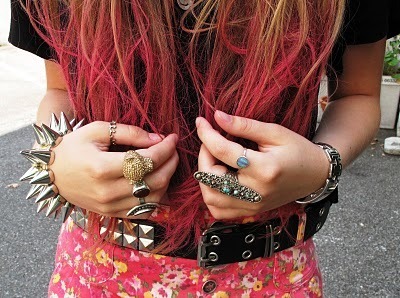
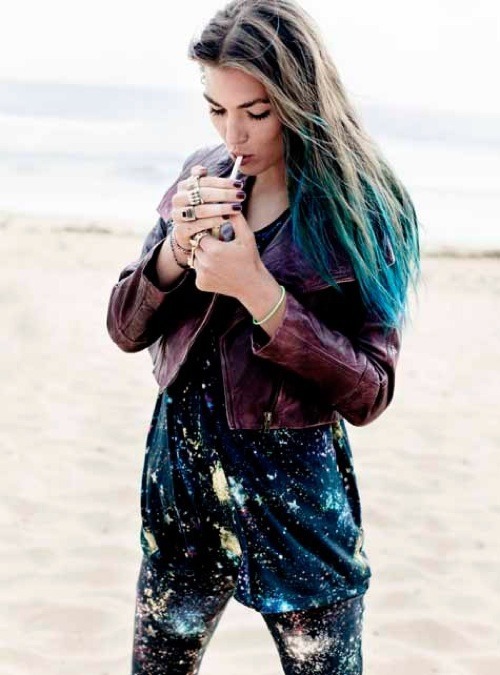
      I really like this trend for dip-dyed hair. It seems that a lot more ladies are pulling it off well and it's leaking its way into local everyday South African styles too.

      It works well for long hair, especially straight and slightly wavy hair types.

      Check out these gorgeous examples of different colours and you might even be inspired to try it out :)

      Pinks

      http://forum.lookbook.nu/

      http://forum.lookbook.nu/

      Blue
      http://forum.lookbook.nu/

      Rainbow colours
      Taryn Manning
      www.hji.co.uk
      Lauren Conrad
      www.hji.co.uk

      Red and Black!
      http://charlotte-lucyy.deviantart.com/
      ..I think purple would look great too..

      Or try a more natural-looking version, like Ashlee Simpson...
      Ashlee Simpson
      http://vintagelovecouture.buzznet.com/

      What about fading?
      With the latest technology ammonia-free hair colours and bleach, the integrity of the hair is respected and colour-treated hair is less likely to fade, provided that you treat your hair well otherwise. Also make sure that your ends are trimmed to prevent split ends and minimise natural dry ends due to having long hair.

      Tuesday, June 28, 2011

      Thinking of Buying a Hair Straightener?


      Getting your style without the damage
      When buying a hair straightener (which can also be called a flat iron, hair iron or ghd), there are certain benefits and technologies which you should really look out for to get the best results out of the product.

      The main ones are:
      (1) Ionic technology,
      (2) Infra-red technology,
      (3) Tourmaline plates (or quality ceramic), and
      (4) Variable heat settings.

      1) Ionic technology - Negative Ions
      Essentially, positive ions represent damage to the hair fibre whereas negative ions are dominant in naturally healthy hair. The effect of the negative ions means a sealed cuticle (outer layer of the hair) and a smooth hair shaft with natural shine.

      The hair becomes less porous and less vulnerable to humidity so your style will last longer.

      2) Infra-red technology
      Far infrared waves are able to penetrate deeper and heat the hair from the inside, whilst it is simultaneously heated and straightened on the surface. This results in a quicker process and is less damaging to the hair.

      3) Tourmaline plates (or Quality Ceramic)
      Tourmaline is a crystal silicate mineral classified as a semi-precious stone. It exhibits pyroelectricity when heated, meaning it becomes polarized  and is able to emit negative ions (six times more than ceramic) and so helps the hair to seal in and retain moisture. 
       
      Tourmaline hair styling tools are of particular use for people who have thick, frizzy or textured hair, or for those who blow dry, straighten or curl their hair on a regular basis. By sealing the cuticle, hair appears smoother, shinier and healthier.  

      Tourmaline hair styling tools are also smoother than typical ceramic, creating less friction on the hair as it is pulled through. As a result, hair is better conditioned and suffers less damage due to the frequent heat of styling. In addition to better results, fewer styling products are needed to achieve the smooth, shiny look many women look for when blow drying or straightening their hair. 

      The crystal is typically crushed or ground, then applied in a variety of ways to the tourmaline hair styling tools. It may be “infused” into a ceramic coated flat iron or curlers, or be applied in a thin coat over the ceramic. In hair dryers, tourmaline is ground up and coats the inside of the dryer.


      4) Variable heat settings
      Baby fine hair (especially pale hair) is more vulnerable and so you should use the lowest possible setting (Below 170C) to achieve results as the hair, and colour, can be permanently damaged by high heat.

      Remember! Natural fine blonde hair can turn lemon yellow if the delicate ash tones become overheated and are lost.

      Damaged hair can use between 160C and 180C, and up to 200C only if necessary.
      Normal hair is usually styled well at 200C.
      Coarse, thick and resistant hair can bear higher heat, e.g. 220C, depending on the quality of the styling tool used.

      Ladies with very curly hair or naturally frizzy hair should be extra careful with heat styling as the outer layer of the hair (cuticle) is not naturally sealed so extra moisture is easily lost, and the hair can become dried out and scorched. If you have this hair type, be extra careful to use a heat protection serum (silicone) and do not focus heat on any one area as the hair fibre is more exposed and more easily damaged on the surface.

      Short List of Things to Look For in a straightener
      • Heats up quickly and straightens easily
      • A swivel cord that doesn't twist or tangle
      • Long-lasting results - The hair stays straight even in humid weather
      • Durability - The straightener is hardy (and preferably under guarantee)
      • Ease of use and hold (Light weight with a pleasant shape)
      • Adjustable heat settings for different hair types
      • Auto-timer to switch off when not in use or overheats

      Short List of Things to Avoid when buying a straightener
      • A straightener which gets too hot
      • An awkward or delicate straightener which could break easily
      • A cord which tangles and is difficult to manoeuvre
      • A temperature setting which can get changed without you realising (ie. it's too flimsy and can be easily bumped)
      • If it is missing an auto-timer function to switch itself off when unattended

      From a styling point of view, straightening can make your hair not only look longer but also much sleeker. It also shows off your hair colour as the hair surface is smooth and glossy. Blondes especially look brighter with straighter, smoother hair. 

      You may also be interested in: Treat your Tresses